TL;DR
The short version of this article
- Digital marketing for aesthetic clinics is won on trust and proof: who performs the treatment, real before-and-after results shared with consent, transparent pricing and fast replies, mostly on Instagram and Google Maps.
- Most revenue comes from repeat treatments, so rebooking reminders, memberships and packages matter as much as new-patient ads.
- The ad rules are strict: Botox is a restricted drug term on Google, cosmetic procedures cannot use remarketing lists, Meta requires 18+ targeting and rejects appearance-shaming claims, and patient photos need written consent.
In this article
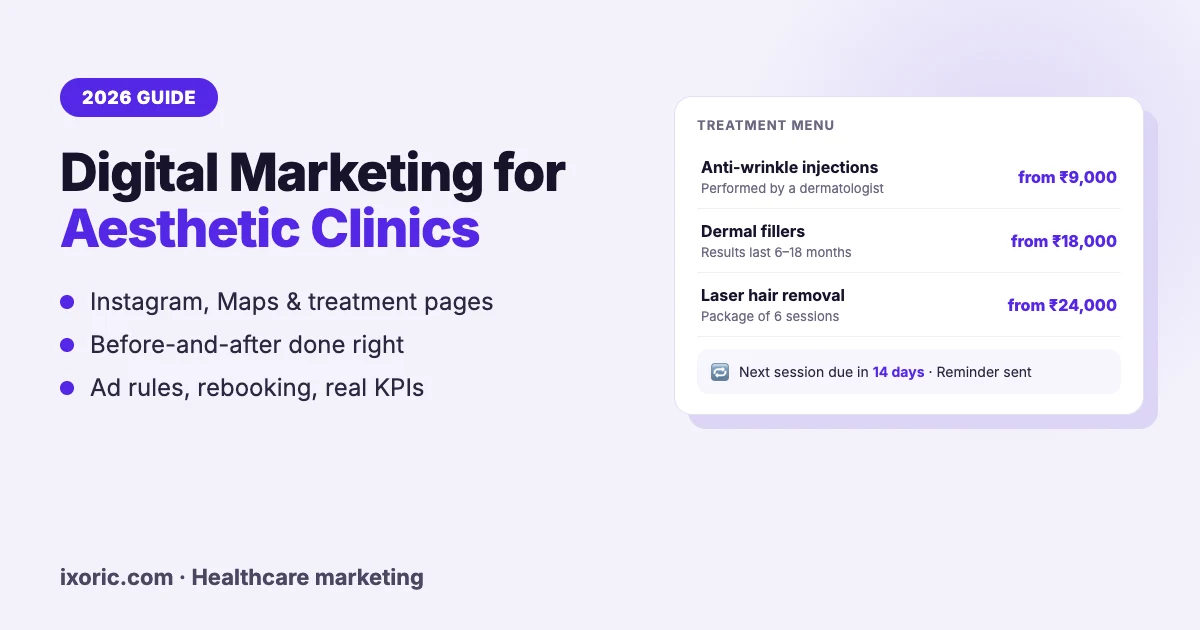
Digital marketing for aesthetic clinics is the work of helping people who are considering a cosmetic treatment, such as anti-wrinkle injections, fillers, laser hair removal, skin treatments or body contouring, discover your clinic, trust the practitioner and book. Aesthetic marketing differs from most healthcare marketing in three ways. Patients choose treatments they want rather than need, so proof and trust decide the sale. Most clinics earn their revenue from repeat visits, so retention matters as much as acquisition. And advertising rules for cosmetic treatments are among the strictest in healthcare. This guide covers what to fix first, how to use Instagram, Google and before-and-after content without breaking the rules, how to keep patients coming back, and what to measure.
Whether you call it an aesthetic clinic, an aesthetics clinic, a med spa or a cosmetic dermatology practice, the playbook is the same. Statistics are linked to their sources at the end.
The aesthetics market in numbers
| Metric | Figure | Source |
|---|---|---|
| Neuromodulator injections (Botox, Dysport, Xeomin, Jeuveau, Daxxify) in the U.S. | 9,883,711 in 2024, up about 4% | American Society of Plastic Surgeons |
| Hyaluronic acid filler procedures in the U.S. | 5,331,426 in 2024 | American Society of Plastic Surgeons |
| Minimally invasive cosmetic procedures in the U.S. | 28.5 million+ in 2024 | American Society of Plastic Surgeons |
| Medical spas in the U.S. | 10,488 (2023) | American Med Spa Association |
| Average annual revenue per U.S. med spa | $1,398,833 (2024) | American Med Spa Association |
What this means for your marketing:
- Injectables drive the market, and they repeat. Neuromodulators wear off in a few months and fillers within a year or two, so a satisfied patient returns again and again. A clinic that rebooks well needs far fewer new patients than one that does not.
- Competition is dense. With more than ten thousand med spas in the U.S. alone, and a fast-growing number of skin and aesthetic clinics in Indian cities, patients compare several options. They choose on visible proof: results, practitioner credentials, reviews and price.
- Revenue per clinic is high enough to justify proper tracking. At average revenue above $1.3 million a year per U.S. med spa, knowing which channel produces booked, paying patients is worth the setup effort.
How patients choose an aesthetic clinic
| Step | What the patient does | What wins it |
|---|---|---|
| Inspiration | Sees results on Instagram, TikTok or YouTube, or hears from a friend | Consistent, honest content showing real results and real practitioners |
| Research | Searches “[treatment] near me”, “[treatment] cost in [city]”, reads reviews | A treatment page with price ranges, a strong Google Business Profile, recent reviews |
| Trust check | Looks up who performs the treatment and their qualifications | Named practitioners with credentials, registration and experience |
| Enquiry | Sends a DM or WhatsApp, or books a consultation | Replies within minutes, easy online booking |
| Treatment and rebooking | Has the treatment, decides whether to return | Aftercare, follow-up and a reminder when it is time for the next session |
Aesthetic purchases are emotional and considered at the same time. Many patients follow a clinic for weeks before they book, so the clinics that grow fastest show up consistently and answer quickly when the patient is ready.
1. Practitioner credentials come first
In aesthetics, the most important trust signal is who holds the needle or the laser. Every treatment page and profile should name the practitioner, their qualification (for example dermatologist, plastic surgeon, physician or nurse injector), registration number, years of experience and training for that treatment. In India, regulators have been clear that only qualified medical practitioners should perform injectable procedures; the Delhi Medical Council said in November 2024 that dentists are not qualified to perform procedures like Botox, and in May 2026 the drug regulator CDSCO warned that cosmetics cannot be injected, targeting clinics offering “glow drips” and skin shots. Patients are increasingly aware of these warnings, which makes visible credentials a competitive advantage.
2. Google Business Profile and treatment pages
- Google Business Profile: choose the category that matches your practice (for example “Medical spa”, “Skin care clinic”, “Dermatologist” or “Cosmetic surgeon”), list every treatment with a price range, keep hours exact, and add photos of the clinic, treatment rooms and team every month. Use the name on your signage; keyword-stuffed names get profiles suspended.
- One page per treatment: anti-wrinkle injections, dermal fillers, lip fillers, laser hair removal, chemical peels, microneedling, hydrafacial, pigmentation treatment, acne scar treatment, body contouring. Each page should cover who it suits and who it does not, what happens, how long results last, downtime, risks, price range and the practitioner who performs it.
- Pricing: aesthetics patients compare prices before they enquire. A clear “from” price or range per treatment brings better-qualified enquiries and fewer price-shoppers in the DMs.
- Structured data: add MedicalClinic or MedicalBusiness markup with address, hours and services, and FAQPage markup for visible FAQs.
Our local SEO and Google Business Profile service and website development team handle this setup.
3. Before-and-after content, done properly
Before-and-after photos are the most persuasive content an aesthetic clinic has, and the most regulated.
- Consent first. Get written consent from the patient for each specific use (website, Instagram, ads), and let them withdraw it. In the U.S., an identifiable patient photo is protected health information under HIPAA and needs a signed authorization. In India, the Digital Personal Data Protection Rules, 2025 add consent duties for personal data, with most obligations applying from May 2027.
- Honest presentation. Same lighting, angle and expression; no filters or retouching; the treatment, number of sessions and time between photos stated; and a note that results vary.
- Real patients only. Never use stock or manufacturer photos as if they were your own results.
- Ads are stricter than organic posts. See the advertising section below.
4. Instagram and short video
Instagram is where most aesthetic patients find and vet clinics. What works:
- Practitioner-led video: your doctor or injector explaining a treatment, what it feels like and who it is not suitable for. Expertise on camera builds more trust than polished brand videos.
- Process and aftercare: consultation walk-throughs, what happens on treatment day, how to care for skin afterwards.
- Results with consent, with honest captions.
- Highlights by treatment, plus FAQs, prices and how to book.
- Fast replies to DMs and comments, ideally within the hour during working hours. Most enquiries begin as a DM asking for a price.
Avoid language that implies something is wrong with how people look, such as “fix your ugly lines” or “tired of looking old?”. Meta rejects ads framed this way, and it alienates the audience.
5. Advertising: what is allowed
| Platform | Key rules for aesthetic clinics | What to do |
|---|---|---|
| Google Ads | Botox and other prescription drug names are restricted terms; using them in keywords or ads requires Google’s healthcare certification. Cosmetic procedures and injections are a sensitive category, so ads cannot use customer lists, remarketing lists or lookalike audiences. | Check certification before bidding on drug names, use treatment-based terms such as “anti-wrinkle injections”, and target by location and search intent |
| Meta (Facebook and Instagram) | Cosmetic procedure ads must target people aged 18 and over. Ads must not shame appearance or promise specific results in a set time. Meta’s rules on before-and-after images have changed several times; 2026 reporting says cosmetic before-and-after images are allowed for adults with claims reviewed, while weight-loss comparisons remain restricted. | Target 18+, use positive and factual copy, check the current Meta Transparency Center policy before running before-and-after ads |
| India (all channels) | The Drugs and Magic Remedies Act bans claims to cure listed conditions; doctors are restricted from self-promotion under the IMC 2002 code; injectable cosmetics are under CDSCO scrutiny. | Promote the clinic and its services factually, show qualifications, avoid “best” and guaranteed-result claims |
Search ads work best for high-intent searches such as “laser hair removal near me” or “lip filler cost in [city]”, sending each campaign to its own treatment page. Meta ads work best for local awareness, consultation offers and lead forms. In both cases, measure booked consultations and paying patients, not clicks or leads alone. Our performance marketing team builds healthcare campaigns around these rules.
6. Reviews
Ask every patient for a Google review after their treatment, once the result is visible. Never offer discounts or free treatments in exchange for reviews and never post fake ones: Google prohibits it, and in the U.S. the FTC’s rule on fake reviews and testimonials has applied since October 21, 2024. Reply to every review without confirming that the reviewer was a patient or mentioning their treatment.
7. Retention: where aesthetic clinics make their money
Because so many treatments need repeating, retention is the highest-return marketing an aesthetic clinic can do.
- Rebooking at checkout: book the next appointment before the patient leaves, timed to when the treatment typically wears off.
- Reminders: an SMS or WhatsApp reminder a week or two before the next session is due.
- Packages for course-based treatments: laser hair removal, peels and skin treatments often need several sessions; package pricing improves completion and cash flow.
- Memberships: a monthly fee that includes a set treatment and member pricing smooths revenue and keeps patients loyal.
- Follow-up after the first treatment: a check-in message a few days later catches concerns early and is the best moment to ask for a review.
In India, where most patients prefer WhatsApp, our Vatli WhatsApp platform handles enquiries, reminders and rebooking, and it connects to HubSpot so every lead is tracked.
8. What to measure
| Metric | Why it matters |
|---|---|
| Cost per booked consultation by channel | Shows which ads and content actually produce patients |
| Consultation-to-treatment rate | Tells you whether leads are the right patients and whether consultations convert |
| Rebooking rate and time between visits | The biggest driver of revenue for injectables and course treatments |
| Revenue per patient over 12 months | The basis for how much you can spend to acquire a new patient |
| DM and WhatsApp response time | Slow replies lose aesthetic enquiries to faster clinics |
| Reviews per month and average rating | Drives Google Maps visibility and choice |
Set ad budgets from the 12-month value of a patient, not the price of a single treatment. A patient who returns every few months for injectables is worth several times their first visit, which justifies a higher acquisition cost than the first ticket suggests.
A 90-day plan for one aesthetic clinic
- Weeks 1–2: complete the Google Business Profile with treatments and price ranges, publish practitioner profiles with credentials, and set up consent forms for photos.
- Weeks 3–4: publish pages for your three highest-revenue treatments, switch on review requests and rebooking reminders, and set up tracking for consultations booked.
- Month 2: post practitioner-led Instagram content three times a week, and launch a Search campaign for your highest-intent treatment.
- Month 3: add a Meta campaign for consultations targeted to adults nearby, introduce a package or membership, and review cost per booked consultation and rebooking rate.
Mistakes we see most often
- Using “Botox” in Google Ads without certification, then wondering why ads are disapproved.
- Before-and-after photos without written consent, or edited photos presented as results.
- Ads that shame appearance or promise results in days.
- No prices anywhere, so every DM is a price enquiry that never books.
- No rebooking system, so injectable patients drift to cheaper clinics.
- Practitioners not named on the website, leaving patients unsure who will treat them.
How Ixoric can help
We are a digital marketing agency, not a clinic. Our healthcare work spans more than 20 clients, including hospitals, specialist clinics and dental practices, and we plan marketing for regulated treatments within the rules above. See our healthcare digital marketing page, our complete guide to digital marketing for clinics, or request a free audit of your profile, website, Instagram and ads.
FAQ: digital marketing for aesthetic clinics
What is the best marketing strategy for an aesthetic clinic?
Lead with trust and proof: named practitioners with credentials, real results shared with consent, transparent prices and fast replies on Instagram and WhatsApp. Build a strong Google Business Profile and a page per treatment, then add Search and Meta ads for consultations, and put as much effort into rebooking existing patients as into finding new ones.
Can aesthetic clinics advertise Botox on Google?
Botox and other prescription drug names are restricted terms in Google Ads, so using them in keywords or ad text requires Google’s healthcare certification. Many clinics instead advertise treatment-based terms such as “anti-wrinkle injections”. Cosmetic procedures are also a sensitive category, so remarketing and customer lists are not allowed.
Are before-and-after photos allowed in aesthetic clinic ads?
On your website and organic social, yes, with the patient’s written consent and honest presentation. In ads the rules are stricter and have changed often: Meta requires 18+ targeting and rejects appearance-shaming or guaranteed-result claims, so check the current policy before running before-and-after ads.
How do aesthetic clinics get more repeat patients?
Book the next appointment before the patient leaves, send a reminder when the treatment is due to wear off, offer packages for course-based treatments and memberships for regular injectables, and follow up a few days after the first visit.
How much should an aesthetic clinic spend on marketing?
Base it on the 12-month value of a patient rather than the first treatment price. Decide what share of that value you will spend to acquire a patient, then scale each channel only while its cost per booked, paying patient stays under that limit.
Which social media platform is best for aesthetic clinics?
Instagram is the most important for most clinics, because patients discover and vet practitioners there. Short practitioner-led videos, consented results and fast DM replies work best. TikTok and YouTube help with reach and education, and Google Maps captures patients who are ready to book.
Sources
- American Society of Plastic Surgeons, Plastic Surgery Statistics and the ASPS 2024 report announcement (PR Newswire).
- American Med Spa Association, Medical Spa State of the Industry.
- Accelerated Digital Media, 2026 search advertising rules for health brands (Google restricted drug terms and certification).
- Google Ads policy, Health in personalized advertising.
- Medical Dialogues, injectable aesthetic procedures under CDSCO scrutiny, 2026.
- The South First, Delhi Medical Council on dentists performing aesthetic procedures, November 2024.
- Clikim, Meta health and wellness ad policy update, July 2026 (secondary summary; check Meta’s Transparency Center).
- Manatt, FTC issues final rule banning fake reviews and testimonials.
- PIB, Digital Personal Data Protection Rules, 2025.
Free checklist · PDF
AEO Checklist: 10 Checks to Get Cited by AI
- Pass/fail tests for ChatGPT, Gemini and AI Overviews
- Priority and time estimate for each check
- A monthly AI citation log
Your checklist is ready.
Download the PDFWas this article helpful?
What was wrong with it?
Take this article to your AI
Get a summary, ask questions, or turn these ideas into a plan for your team.
Opens your AI with the article ready to go — for Gemini, the prompt is copied so you just paste.
Get new articles from Ixoric
Practical SEO, AI search and growth guides, about twice a month. No spam, unsubscribe any time.
You're subscribed
We'll send you new articles as they're published.
Follow us on Google
Add Ixoric as a preferred source to see our articles first in Google results.